Why Farm Operators Are Choosing Brushless Hub Motors for High‑Efficiency Mowing
A practical look at Shenzhen JinhaiXin’s 10-inch (Ø250mm) brushless hub motor with a short‑shaft design and how it reduces downtime, noise, and maintenance costs for modern lawn and orchard equipment.
Overview: What a Brushless Hub Motor Brings to a Mower
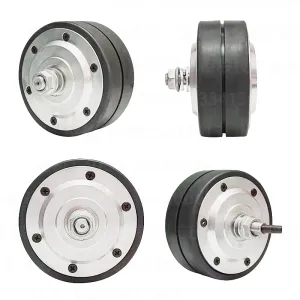
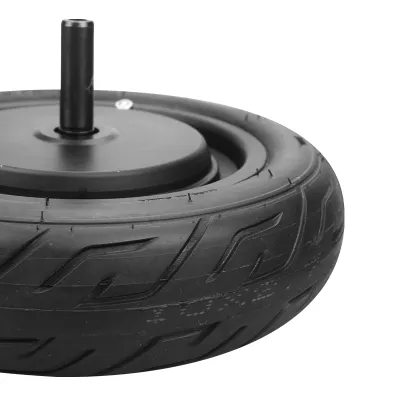
In the transition from traditional brushed drive systems to brushless hub motors, farm equipment manufacturers are focused on three measurable goals: higher drive efficiency, lower maintenance, and predictable performance in wet or debris‑filled conditions. The brushless hub motor addressed here—10 inches (Ø250mm) with a short‑shaft architecture—was developed to meet these demands for ride‑on mowers, orchard mowers and professional turf care equipment.
Core Advantages: Efficiency, Noise Control and Anti‑Tangle Reliability
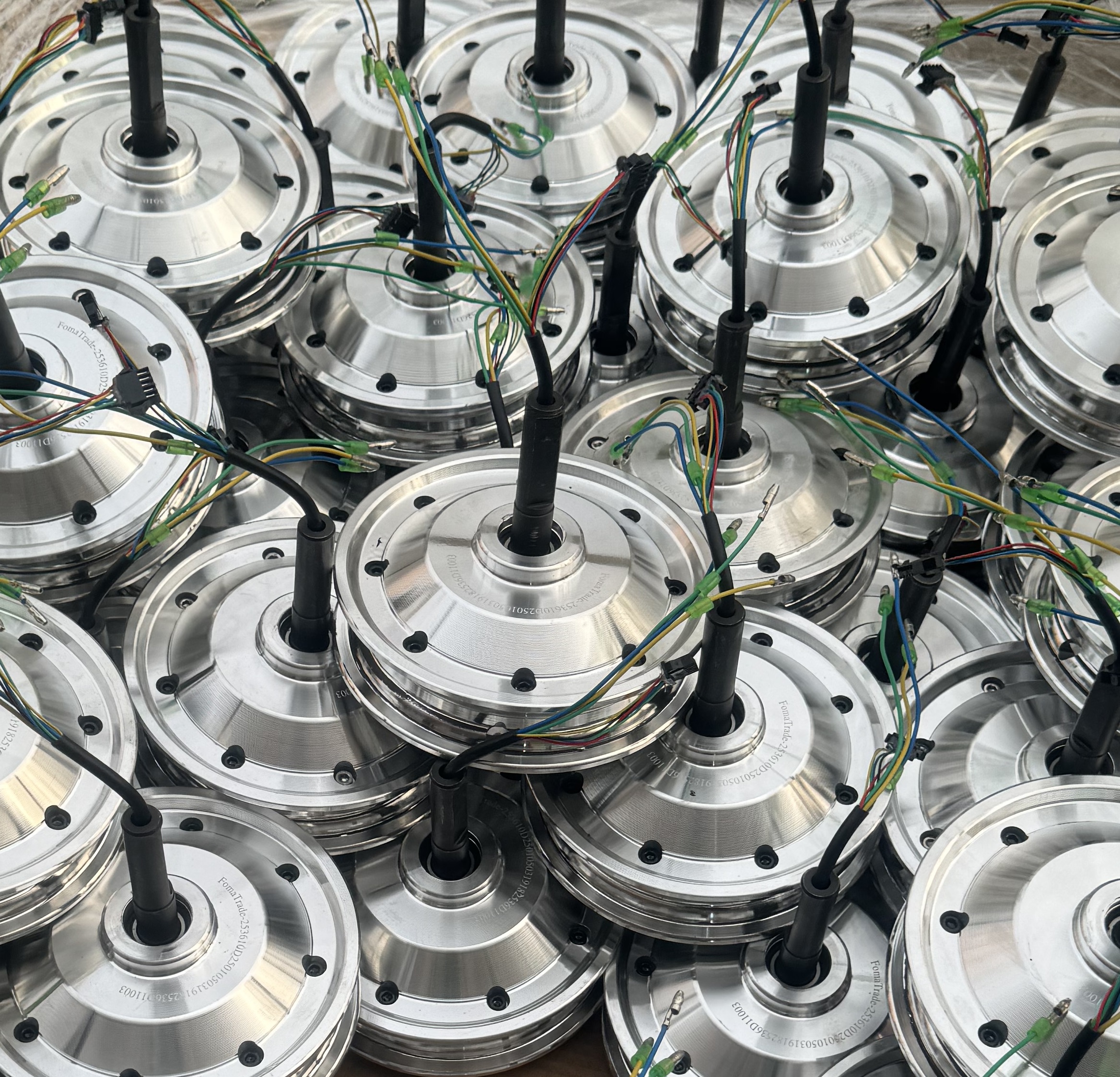
From an engineering perspective, the brushless hub motor delivers three practical improvements:
- Higher drive efficiency: Brushless controllers with direct hub drive reduce transmission losses and improve torque transfer at low RPM—critical for blade cutting and torque spikes from dense vegetation.
- Lower noise profile: Measured operational noise is ≤65 dB at 1 meter during typical mowing duty cycles—noticeably quieter than many mid‑range brushed systems.
- Reduced maintenance: Eliminating brushes and a gearbox reduces routine servicing points; field tests recorded a ~40% improvement in long‑term durability metrics (MTBF) compared to comparable brushed motor assemblies.
Is quieter operation simply a comfort issue? Or does it change how and where the machine can be used? For commercial operators, lower noise extends allowable work hours and reduces operator fatigue—both meaningful cost factors.
Why a 250mm Diameter + Short‑Shaft Design Matters
The combination of a larger diameter (Ø250mm) and a short shaft is more than packaging: it materially alters force distribution and debris management.
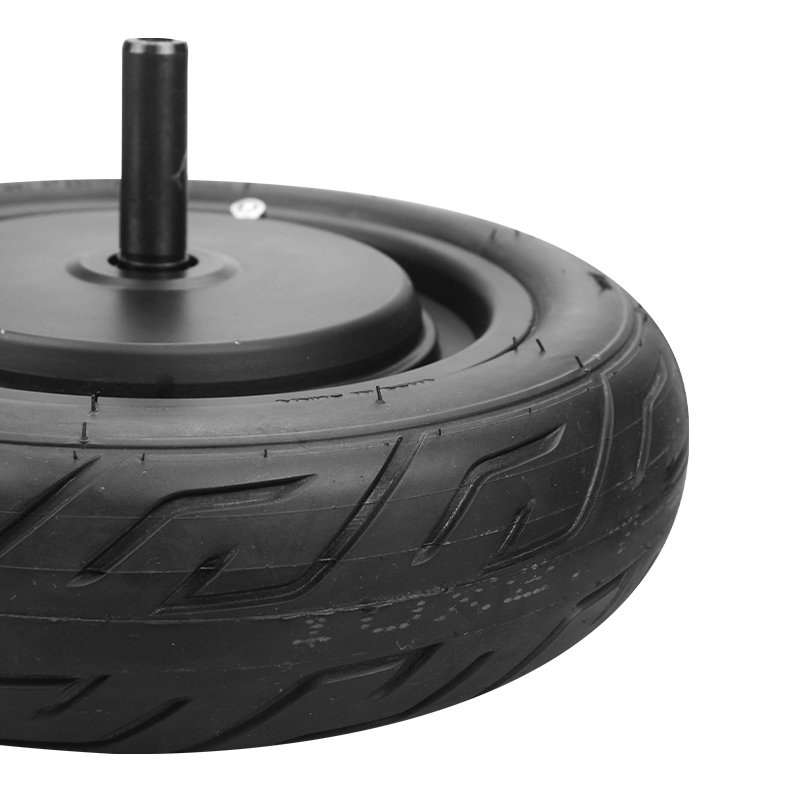
Think of the hub as the mower’s “waist.” A larger, compact hub acts like a more flexible waist: it spreads radial forces over a larger arc and resists momentary stalls when a blade hits heavy material. Shortening the shaft reduces exposed geometry where grass and twigs can wrap around—this is the mechanical heart of the motor’s anti‑tangle advantage.
Practical effects observed in field tests
- Improved torque stability during sudden load changes (smoother recovery from blade strikes).
- Lower incidence of grass‑wrap related stalls—operators reported fewer manual clean‑ups during extended runs.
- Simpler sealing and shielding around rotor/stator interface for enhanced water and debris resistance.
Comparison: Brushless Hub vs. Brushed Motors on Wet and Dense Lawns
Traditional brushed motors—often coupled with external gearboxes—tend to seize or experience higher wear when operating in damp, grass‑laden environments. Brushes and commutators accumulate fiber build‑up and abrasion increases rapidly. The brushless hub motor avoids moving contact wear and, with the short‑shaft geometry, reduces accumulation points.
Application Cases: Orchard, Commercial Turf, and Estate Grounds
Three representative scenarios illustrate tangible benefits:
- Orchard mowers: Operators report fewer wrap‑related stops during pruning season, increasing effective mowing time by 12–18% per shift.
- Commercial turf contractors: Quieter operation (≤65 dB) enables early‑morning jobs in noise‑sensitive zones without community complaints.
- Large estates and golf courses: Lower maintenance frequency reduces annual service hours and parts replacements—translating into lower total cost of ownership over the equipment lifecycle.
Customer: "Downtime from grass‑wrap used to cost us two tech visits a week. After switching to the brushless hub units, we stopped carrying spare comms and brushes in the truck."
— Commercial turf manager, Pacific Northwest
Engineer: "The short‑shaft layout simplifies sealing strategies—less ingress area and a predictable torque arm mean fewer field repairs."
— Design engineer, Shenzhen JinhaiXin
Deployment Considerations for Manufacturers and Buyers
When evaluating brushless hub motors for production or retrofitting, consider:
- Controller compatibility—peak current handling and regenerative braking strategy for blade inertia.
- Mechanical interface—shaft length, mounting flange, and torque reaction paths to integrate with deck geometry.
- Ingress protection and thermal path—ensure seals and heat dissipation are appropriate for continuous duty cycles.
Do you need a drop‑in motor or a customized hub assembly? Early design alignment reduces integration time and can tailor torque curves to your cutting loads.
Want Detailed Specs or a Customized Drive Package?
For equipment OEMs and farm operators exploring upgrades, further technical data—including torque maps, thermal curves and IP ratings—are available on request. A short consult clarifies whether a standard 10-inch (Ø250mm) hub suits your deck or if a tailored variant is required.