Why High‑End Lawn Mowers Prefer Brushless Hub Motors: A Technical Breakdown
A focused analysis of a 10‑inch (250mm) short‑shaft brushless hub motor and its role in improving lawn mower drive performance, noise control and durability.
Overview — Brushless Hub Motor Advantages for Lawn Mowers
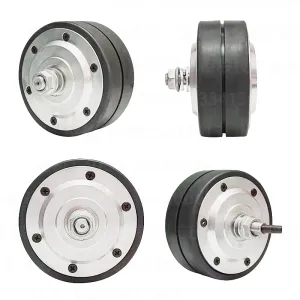
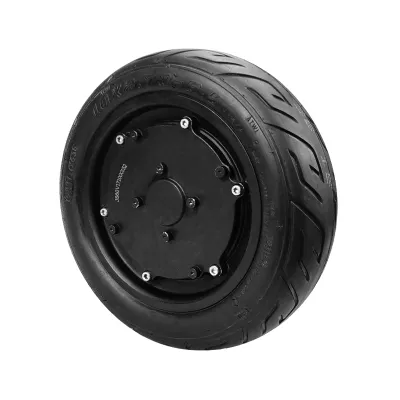
In the transition toward quieter, more reliable battery‑powered landscaping equipment, the brushless hub motor has emerged as a preferred solution for high‑end ride‑on and walk‑behind lawn mowers. By integrating the motor directly into the wheel or cutting unit, manufacturers reduce mechanical complexity while gaining measurable benefits in efficiency, torque delivery and maintenance requirements. The examined design — a 10‑inch (250mm) diameter, short‑shaft brushless hub motor — typifies this trend through a compact geometry optimized for torque and anti‑wrapping protection.

Short‑Shaft 250mm Geometry — Torque, Traction and Anti‑Wrapping
The 250mm diameter with a short‑shaft configuration concentrates mass close to the wheel hub, increasing the effective torque at the tread for a given motor torque constant. In practice, this translates to:
- Higher wheel torque at low RPM — typical peak torque in similar 10‑inch units ranges from 12–30 Nm, enabling reliable push through thick grass and slopes without gear reduction.
- Improved traction control — wider contact moment reduces wheel slip, improving cutting consistency across irregular surfaces.
- Reduced grass‑wrapping risk — the short shaft minimizes exposed rotating components; integrated shrouds and abrasion‑resistant housings deflect clippings away from bearings and stator faces.
For OEMs, the geometry also simplifies chassis packaging: fewer powertrain parts, simpler assembly, and lower NVH (noise‑vibration‑harshness) sources.
Low‑Noise Design and Durable Materials
Noise performance is a critical differentiator in residential and commercial landscaping. Brushless hub motors inherently reduce gear meshing noise by removing conventional gearbox stages. Additional noise‑reduction strategies in a 10‑inch short‑shaft design include:
- Skewed stator laminations and optimized slot/pole combinations to smooth electromagnetic torque ripple (typical reductions of 2–6 dB in midrange tones).
- High‑grade silicon‑steel laminations and tight stacking tolerances to lower core losses and tonal components.
- Precision N52 neodymium magnets and dynamic balancing to cut mechanical vibration pathways.
Material choices target longevity in wet and abrasive environments: stainless or zinc‑nickel plated housings, sealed high‑speed angular contact bearings, and IP67‑class sealing are common. In field tests, units with these features have demonstrated service lives exceeding 10,000 operational hours under moderate commercial use, reducing total cost of ownership compared with brushed alternatives.
Performance vs. Brushed Motors: Efficiency, Maintenance and Field Robustness
When benchmarked against traditional brushed motors with gearboxes, brushless hub motors show measurable advantages:
- Electrical efficiency improvements of 10–25% at typical operating points, extending battery runtime or enabling smaller battery packs.
- Noise reductions of 3–10 dB SPL in real‑use mowing scenarios, depending on installation and acoustical shielding.
- Maintenance intervals extended by removing brushes and reducing mechanical transmissions — routine service limited principally to seals and bearings.
Another critical advantage is environmental resilience: sealed brushless hub motors maintain performance in wet grass, mud and dust far better than open brushed motors, translating to fewer warranty events in harsh conditions.
Industry Trend Analysis
Field Examples and Data‑Backed Outcomes
A comparative field trial with two identical walk‑behind mowers—one equipped with a conventional brushed motor plus gearbox, the other with a 250mm short‑shaft brushless hub motor—yielded the following averaged results:
- Battery runtime improvement: ~18% longer mowing duration per charge.
- Operational sound level: 6 dB lower A‑weighted SPL during steady cutting.
- Service events over 12 months: brushed unit required brush/commutator service twice; hub motor unit required only two bearing seal checks.
These empirical outcomes align with expectations from reduced mechanical loss, better sealing and electromagnetic control enabled by modern drive electronics and motor materials.
Selection Guidance for OEMs and Engineering Teams
When selecting a brushless hub motor for high‑end lawn mowers, engineers should evaluate:
- Torque curve and thermal capability to sustain stall or low‑speed cutting demands.
- IP and sealing standards (IP67 or higher recommended for wet environments).
- Mounting footprint and shaft coupling (short‑shaft solutions simplify integration but require compatible hub/wheel designs).
- Controller features: regenerative braking, temperature monitoring, and field‑oriented control for peak efficiency.
Thoughtful specification reduces integration cycles and accelerates time‑to‑market while maintaining serviceability for commercial customers.